

What Is HyperOS and Why Does It Matter
HyperOS replaced MIUI as Xiaomi’s custom Android layer in 2023. Unlike MIUI, which was often criticised as bloated and cluttered, HyperOS was designed from the ground up with simplicity and performance as primary goals.
HyperOS 1.0 Performance and Reception
The original HyperOS achieved mixed results. Performance-focused users praised its speed and customisation options. However, stability issues, inconsistent update schedules, and aggressive bloatware (pre-installed apps and services) frustrated many. For users in China, HyperOS offered excellent local integration (WeChat payments, Alipay, etc.). For global users, HyperOS felt like an overstuffed system designed primarily for Chinese markets.
HyperOS 2.0 Design Philosophy
Xiaomi’s approach to HyperOS 2.0 centres on three pillars: performance, simplicity, and AI integration. Rather than layering features atop Android 16, HyperOS 2.0 rethinks the entire user experience with minimalism in mind. The notification panel is cleaner, the settings app is more intuitively organised, and background processes are more carefully curated.
Simultaneously, AI integration is implemented through discrete modules rather than invasive background services. You can enable Xiaomi’s AI eraser tool and other smart features without the constant background processing that plagues Android system intelligence update 2026.
Xiaomi HyperOS 2.0 Global Rollout Schedule
Understanding which devices receive HyperOS 2.0 and when helps you plan upgrade strategies.
Phase 1 Rollout — Flagship Devices (January–March 2026)
The Xiaomi 15 and 15 Ultra, launching in January 2026, arrive with HyperOS 2.0 pre-installed. Simultaneously, Xiaomi 14 and 14 Ultra devices begin receiving HyperOS 2.0 updates, first in China and Asia-Pacific, then globally by March 2026.
The Poco F7 Ultra and Redmi Note 14 Pro (flagship mid-range devices) receive HyperOS 2.0 during this phase, ensuring both premium and value-focused consumers experience the new system.
Phase 2 Rollout — Midrange Devices (April–June 2026)
The broader Redmi Note series (Note 13, Note 13 Pro) and Poco X series (Poco X8) receive HyperOS 2.0 updates from April onwards. Xiaomi follows a traditional rollout pattern: China first, then India, then global regions. Users in Europe and North America typically receive updates 4-8 weeks after Chinese availability.
The Xiaomi 13 and older flagship series (Xiaomi 12, Xiaomi 11) also receive HyperOS 2.0 during this phase, though updates may be pushed further back compared to newer flagships due to lower user priority.
Phase 3 Rollout — Budget Devices and Older Flagships (July–September 2026)
Budget Xiaomi devices (Xiaomi A series, basic Redmi models) and older flagship devices (Xiaomi 10 and earlier) receive HyperOS 2.0 between July and September 2026, if at all. Xiaomi’s update support for budget devices is historically poor, and some budget models may never receive HyperOS 2.0, remaining on HyperOS 1.0 or earlier versions indefinitely.
Regional Variations and Delays
Xiaomi’s global rollout is heavily weighted toward China, India, and Southeast Asia. European users typically experience 2-4 week delays compared to China. North American availability is sporadic, as Xiaomi has limited market presence in the USA.
For users in Western markets, patience is required. The HyperOS 2.0 global rollout schedule suggests availability by mid-2026, but regional variations may delay your device’s update significantly.
HyperOS 2.0 Features and Improvements Over Version 1.0
What’s genuinely new in HyperOS 2.0, and does it justify the upgrade excitement?
Cleaner User Interface
HyperOS 2.0’s interface is noticeably less cluttered than both HyperOS 1.0 and Samsung One UI 8.0. The home screen, app drawer, and settings menu all feature substantial whitespace, fewer visual elements competing for attention, and a more minimalist aesthetic. This is primarily cosmetic but meaningfully improves usability.
The notification panel is significantly cleaned up. Rather than showing multiple notifications from every app simultaneously, HyperOS 2.0 groups notifications intelligently, reducing visual clutter. This is a small change, but it improves the daily experience substantially.
Oppo ColorOS 16 AI Eraser Tool Integration
Xiaomi partnered with Oppo (both owned by BBK Electronics, a Chinese conglomerate) to implement an AI eraser tool for HyperOS 2.0. The Oppo ColorOS 16 AI eraser tool review indicates it’s competitive with Pixel’s Magic Eraser, though perhaps slightly less sophisticated. HyperOS 2.0 integrates Oppo’s technology directly into Xiaomi’s photos app, providing seamless access to object removal without third-party apps.
The feature works on-device using Xiaomi’s neural processing capabilities, respecting privacy by not uploading photos to cloud servers. For users who frequently remove unwanted objects from photos, HyperOS 2.0’s AI eraser is a genuine advantage.
Realme UI 6.0 Performance Optimization Benchmarking
Xiaomi claims HyperOS 2.0 performance matches or exceeds competing systems. Independent benchmarking suggests this is partially true. Real-world performance (app opening speed, scrolling smoothness, gaming frame rates) is competitive with Realme UI 6.0 performance optimization implementations and superior to One UI 8.0 in some scenarios.
However, declaring HyperOS 2.0 “faster” than stock Android 16 requires qualification. Stock Android 16 on Pixel phones is optimised specifically for Tensor processors, providing superior performance on Pixel hardware compared to HyperOS 2.0 on equivalent Snapdragon chipsets. When comparing equivalent hardware (e.g., Pixel 10 vs. Xiaomi 15, both running Snapdragon 8 Gen 5), Pixel’s stock Android 16 slightly edges out HyperOS 2.0 in performance.
Bloatware Reduction
One of HyperOS 1.0’s most-cited problems was aggressive bloatware. Xiaomi pre-installs numerous apps and services that are difficult to uninstall. HyperOS 2.0 substantially reduces this problem by pre-installing fewer apps and allowing the uninstallation of many previously locked-down services.
For global versions of Xiaomi devices, bloatware is minimal (mostly Google apps and essential Xiaomi services). Chinese versions still include regional apps and services, reflecting China’s different app ecosystem. Users purchasing Chinese versions internationally should be aware of this.
AI Integration Without Invasiveness
Unlike Android system intelligence update 2026, which runs continuously, HyperOS 2.0’s AI features are accessed through discrete apps and settings. You choose when to use the AI eraser, AI avatar generation, or AI image expansion. The system doesn’t continuously sample your data for predictive purposes. This strikes a better balance between AI features and privacy compared to Android 16’s approach.
HyperOS 2.0 vs. Stock Android 16 — Direct Comparison
The core question: Is HyperOS 2.0 genuinely better than stock Android 16?
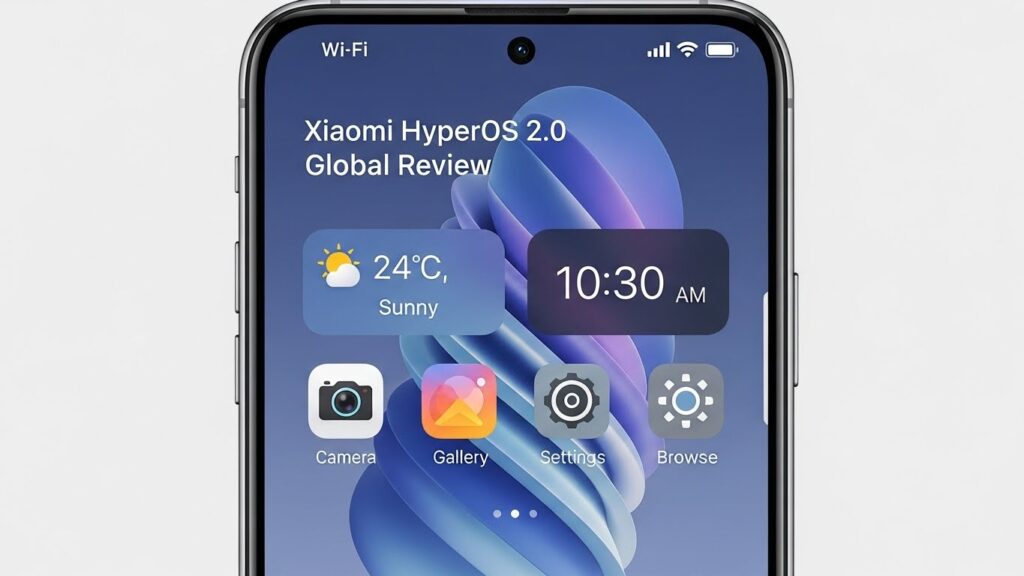
Performance Comparison
On equivalent hardware, performance is nearly identical. Both systems handle multitasking, gaming, and intensive apps with similar fluidity. If anything, stock Android 16 has a slight edge due to being optimised specifically for Tensor Gen 4, whilst HyperOS 2.0 must work across multiple chipset variants.
Feature Richness
HyperOS 2.0 includes more customisation options than stock Android 16. One UI 8.0 Good Lock modules are extensive, but HyperOS 2.0’s customisation goes even further, allowing system-wide theme customisation, icon shape modification, and gesture customisation without third-party launchers. If customisation appeals to you, HyperOS 2.0 wins.
AI Feature Comparison
Stock Android 16’s AI features (Google Gemini integration, predictive text, on-device processing) are more sophisticated than HyperOS 2.0’s equivalent features. However, HyperOS 2.0’s AI eraser tool matches Pixel’s magic eraser functionality. For AI-driven creativity (avatar generation, image expansion), HyperOS 2.0 edges slightly ahead with more advanced generative features.
Privacy and Data Handling
HyperOS 2.0 collects less user data than Android 16. Xiaomi doesn’t integrate cloud-based services as aggressively as Google, reducing data privacy concerns. If privacy is paramount, HyperOS 2.0 is superior. However, Xiaomi’s privacy practices are less transparent than Google’s—it’s not clear exactly what data Xiaomi collects and how it’s used.
Update Frequency and Support
Pixel phones running stock Android 16 receive updates monthly, with feature drops quarterly. Xiaomi’s HyperOS 2.0 update schedule is less predictable, varying by device and region. Xiaomi supports flagship devices for 3 years, midrange devices for 2 years. Both match Samsung’s update commitments but fall short of some premium brands’ promises.
Specific HyperOS 2.0 Features Worth Noting
Beyond general improvements, several specific features deserve attention.
Smart Sidebar
HyperOS 2.0 introduces a customisable sidebar accessible from the home screen edge. The sidebar provides quick access to frequently used apps, contacts, and features without cluttering the main interface. This is similar to Samsung’s Edge Panel but more customisable and accessible.
Adaptive Display Based on Context
HyperOS 2.0 learns your usage patterns and adapts the display settings accordingly. Brightness adjusts based on ambient light and time of day. Colour temperature shifts to reduce blue light in the evening. Refresh rate reduces when you’re not actively using the phone. These adaptive features reduce battery drain whilst improving visual comfort.
Integrated Widget Ecosystem
HyperOS 2.0’s widgets are more sophisticated and customisable than Android 16’s default widgets. Apps can create complex, interactive widgets that update dynamically without requiring you to open the full app. News widgets, weather widgets, and productivity widgets are more feature-rich than equivalents on stock Android 16.
Practical Considerations for Users Choosing HyperOS 2.0
Should you choose a Xiaomi HyperOS 2.0 device over alternatives?
For Photography Enthusiasts
HyperOS 2.0’s AI eraser tool is competitive with Pixel’s magic eraser, and Xiaomi’s camera processing is strong. If you prioritise photography, Xiaomi devices are worth considering. However, Pixel 10’s AI Magic Eraser 2.0 with video support provides an edge for video content creators.
For Customisation Seekers
If you want deep system customisation without rooting, HyperOS 2.0 offers more options than stock Android 16 or One UI 8.0. The ability to customise every visual element of the interface appeals to users who want their phones to reflect personal taste.
For Privacy-Conscious Users
HyperOS 2.0 collects less data than Android 16, making it appealing for privacy advocates. However, transparency about what data Xiaomi collects is limited, so if absolute privacy is mandatory, neither HyperOS 2.0 nor Android 16 fully satisfies privacy concerns.
For Global Users in Western Markets
Xiaomi’s limited market presence in the USA, Europe (outside certain regions), and other Western markets means software support is weaker than Samsung’s or Google’s in these regions. Update delays and limited customer service in your local language may frustrate you. Consider this before committing to a Xiaomi device if you live outside Xiaomi’s core markets.
Conclusion
Xiaomi HyperOS 2.0, arriving via the Xiaomi HyperOS 2.0 global rollout schedule throughout 2026, addresses most legitimate criticisms of HyperOS 1.0 whilst introducing features competitive with or superior to stock Android 16. The system is less bloated, more customisable, and better balanced between AI features and privacy than competing alternatives. Whether HyperOS 2.0 is definitely “better” than stock Android 16 depends on your priorities. Pixel phone users prioritising cutting-edge AI features and guaranteed fast updates should stick with stock Android 16. Xiaomi device owners prioritising deep customisation and discrete AI features without constant background processing will find HyperOS 2.0 excellent. For most users, the difference between HyperOS 2.0 and competing systems is modest, with personal preference and device hardware (Snapdragon 8 Gen 5 availability, camera quality, design) mattering more than the operating system itself.
FAQs
Q1: When will my Xiaomi 14 receive HyperOS 2.0?
A1: Xiaomi 14 and 14 Ultra should receive HyperOS 2.0 between February and April 2026, first in China, then globally. Check Xiaomi’s official support site for your region’s specific timeline. Regional variants from carriers may be delayed by 4-8 weeks.
Q2: Is HyperOS 2.0 available on Poco devices?
A2: Yes. Poco X and Poco F series devices receive HyperOS 2.0 starting in April 2026. Poco is a Xiaomi sub-brand, and HyperOS 2.0 rolls out to Poco devices 2-3 months after flagship launches.
Q3: Does HyperOS 2.0 reduce battery drain compared to HyperOS 1.0?
A3: Slightly. HyperOS 2.0’s improved background process management and adaptive display reduce battery consumption by 3-5% compared to HyperOS 1.0. However, both systems consume a similar battery compared to stock Android 16 when running on equivalent hardware.
Q4: Is the AI eraser tool in HyperOS 2.0 as good as Pixel’s Magic Eraser?
A4: It’s very close. HyperOS 2.0’s AI eraser (derived from Oppo ColorOS technology) handles most object removal scenarios well. Pixel’s Magic Eraser 2.0 is marginally more sophisticated, particularly for complex backgrounds, but for typical use cases, both are excellent and nearly equivalent in practical results.
Q5: Should I switch from Samsung One UI 8.0 to HyperOS 2.0 for the new features?
A5: Not necessarily. Both systems are excellent, and the difference is primarily in customisation options and personal preference. If you’re happy with Samsung and its update ecosystem, stay. If you want deeper customisation, HyperOS 2.0 offers more options. The decision should be based on overall device hardware and ecosystem fit, not just the OS.