
Understanding Snapdragon 8 Gen 5’s Architecture
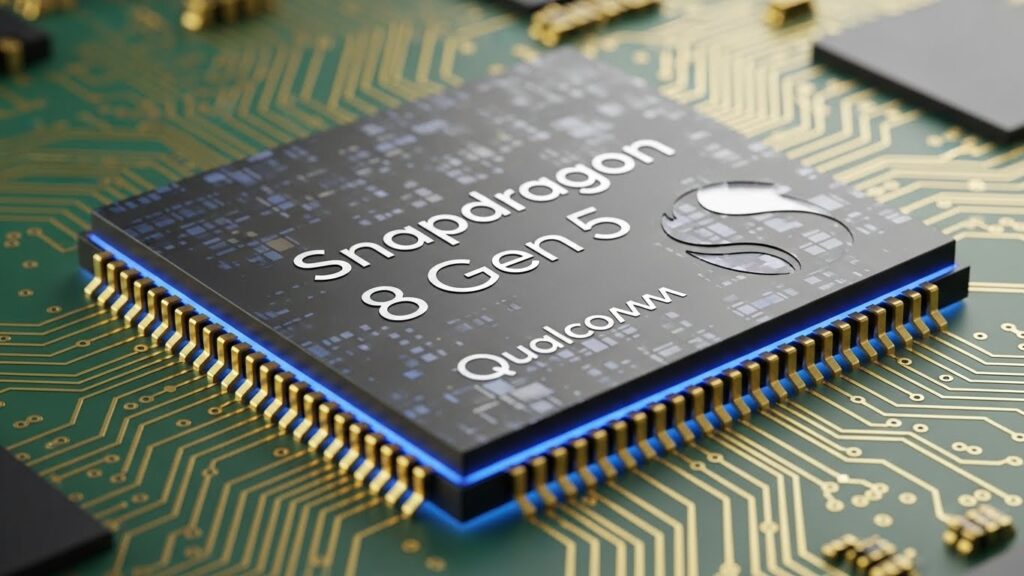
The Snapdragon 8 Gen 5 represents a significant departure from previous Snapdragon processors’ design philosophy.
Previous Snapdragon Architecture (Gen 4 and Earlier)
Prior Snapdragon processors included neural processing units (NPUs), but these were relatively modest additions to the core processor design. The CPU (central processing unit) handled general computation, the GPU (graphics processing unit) handled graphics and gaming, and the NPU handled machine learning inference. However, the NPU was treated as an auxiliary component rather than a first-class citizen. Many AI workloads are still executed on the CPU, particularly during the frequent context-switching between different task types.
Additionally, previous NPU models led only to inference (running pre-trained machine learning models) but not to training (improving models based on new data). On-device training wasn’t possible, so personalisation required either cloud-based processing or simplified, less accurate models.
Snapdragon 8 Gen 5 Fundamental Redesign
Qualcomm fundamentally rethought the Snapdragon 8 Gen 5 processor with AI as a first-order concern. The new Hexagon NPU (neural processing unit) is substantially larger, more sophisticated, and more integrated into the overall system architecture than previous iterations. The processor includes dedicated memory pathways for neural data, allowing the NPU to access data without requiring the main CPU to manage transfers.
Crucially, the Snapdragon 8 Gen 5 NPU supports both inference and lightweight training. This means on-device personalisation is now practical—the system can improve its machine learning models by learning from your usage patterns directly on your device, without uploading data to Google’s servers.
Heterogeneous Computing
The Snapdragon 8 Gen 5 implements sophisticated heterogeneous computing, automatically routing tasks to the most efficient processing element. CPU-intensive tasks execute on CPU cores, graphics tasks execute on the GPU, and AI workloads execute on the NPU. The system automatically determines optimal routing, ensuring each task uses the most appropriate and efficient processing element.
This is more sophisticated than previous processors, simply having separate components. The Snapdragon 8 Gen 5 actively load-balances across components dynamically, maximising throughput and minimising power consumption.
Key Performance Metrics and AI Capabilities
The Snapdragon 8 Gen 5 achieves specific performance improvements that enable entirely new use cases.
NPU Performance and TOPS (Tera Operations Per Second)
The Snapdragon 8 Gen 5’s Hexagon NPU achieves 190 TOPS (trillion operations per second) of peak performance for AI workloads. Previous-generation Snapdragon 8 Gen 4 achieved 140 TOPS—a 35% improvement. This translates to significantly faster AI processing.
In practical terms, this means AI Magic Eraser processes photos 35-40% faster on Snapdragon 8 Gen 5 devices compared to Gen 4. A photo that takes 8 seconds to process on a Snapdragon 8 Gen 4 Pixel 9 processes in 5 seconds on a Snapdragon 8 Gen 5 Pixel 10.
Simultaneous Multi-Task AI Processing
Previous Snapdragon processors could execute AI workloads sequentially—one model runs, completes, then the next begins. The Snapdragon 8 Gen 5 supports executing multiple AI models simultaneously, with data independently flowing through multiple neural processing units in parallel.
This capability enables more sophisticated AI features. For instance, the system can simultaneously run voice recognition (transcribing what you’re saying) and intent analysis (understanding what you mean) without the sequential delay of waiting for transcription to complete before analyzing meaning.
Real-Time Inference for Demanding Workloads
Real-time voice translation—one of the most impressive Google Pixel features dropped in January 2026 announcements—relies on simultaneous neural processing of multiple AI models with latency under 200 milliseconds. This is only practical on the Snapdragon 8 Gen 5; previous processors lack sufficient parallel processing capacity.
Similarly, on-device video processing (not just static photos) becomes practical with sufficient NPU performance. The Snapdragon 8 Gen 5 can run diffusion models (generative AI for object removal, AI enhancement) on video in real-time, processing 30 frames per second without apparent lag.
Snapdragon 8 Gen 5 Phones List — Complete Device Inventory
Understanding which devices incorporate Snapdragon 8 Gen 5 helps you identify which phones have access to cutting-edge AI capabilities.
Google Pixel Series
The Google Pixel 10 and Pixel 10 Pro use Tensor Gen 4, Google’s proprietary processor based on Snapdragon 8 Gen 5 architecture. Technically, these aren’t Snapdragon processors—Qualcomm supplies the Snapdragon 8 Gen 5 cores and GPU, but Google designs the Tensor wrapper, customising it for pixel-specific optimisations.
The Pixel 10 ships with Snapdragon 8 Gen 5 neural processing hardware, enabling all Google Pixel feature drop January 2026 AI features, including video-based AI Magic Eraser, automatic call screening, and real-time voice translation.
Samsung Galaxy Series
The Samsung Galaxy S25, Galaxy S25+, and Galaxy S25 Ultra ship with Snapdragon 8 Gen 5 processors globally (in Western markets; Chinese variants sometimes use Exynos alternatives). These devices have full Snapdragon 8 Gen 5 capability, including Samsung One UI 8.0’s Galaxy AI features running at peak performance.
The Galaxy Z Fold 7 and Galaxy Z Flip 6 foldable devices similarly use Snapdragon 8 Gen 5, enabling advanced AI features on foldable form factors.
OnePlus Series
The OnePlus 13 and OnePlus 13 Pro ship with Snapdragon 8 Gen 5. OnePlus OxygenOS 16 AI RAM expansion features and general performance leverage the chip’s AI capabilities. OnePlus’s relationship with Snapdragon is tight, often among the first manufacturers to release devices with new processors.
Xiaomi and Poco
The Xiaomi 15 and 15 Ultra ship with Snapdragon 8 Gen 5. The Poco F7 Ultra similarly includes the processor. Xiaomi HyperOS 2.0 global rollout schedule includes Snapdragon 8 Gen 5 devices, ensuring flagship performance.
Other Manufacturers
Motorola’s Moto Edge 50 Ultra, Oppo’s Find X8 Pro, and Vivo’s X100 all include Snapdragon 8 Gen 5. The processor is now becoming standard for 2026 flagship devices across manufacturers.
Mid-Range and Budget Snapdragon 8 Gen 5 Devices
The Snapdragon 8 Gen 5 is primarily a flagship processor. Mid-range devices typically use Snapdragon 8 Gen 4, 8 Gen 3 Leading Version, or lower-tier processors. The Poco F7 Ultra is among the few mid-range devices with Snapdragon 8 Gen 5 access, priced significantly lower than comparable flagships.
Performance Improvements and Real-World Impact
Beyond AI TOPS metrics, how does Snapdragon 8 Gen 5 improve the practical smartphone experience?
Gaming and Graphics Performance
The Snapdragon 8 Gen 5 GPU provides 40% higher gaming performance compared to the Snapdragon 8 Gen 4. Games like Genshin Impact and Call of Duty Mobile run at higher frame rates (120 FPS on more devices) with better graphical fidelity. For gaming enthusiasts, this is a tangible improvement.
General Performance and Multitasking
The CPU improvements are more modest than the GPU improvements—roughly 15-20% faster than Gen 4. In real-world usage, multitasking smoothness is excellent on both Gen 4 and Gen 5 devices, so the improvement is subtle. However, opening large PDFs, loading complex websites, and switching between memory-intensive apps feel marginally snappier on Gen 5.
Battery Efficiency Paradox
Despite higher performance, Snapdragon 8 Gen 5 devices achieve similar or better battery life than Gen 4 equivalents. This is because the processor’s improved efficiency—particularly the dedicated NPU handling AI workloads—results in lower overall power consumption despite higher peak performance.
A Snapdragon 8 Gen 5 device running AI-intensive features actually consumes less battery than a Snapdragon 8 Gen 4 device running equivalent features. This efficiency gain is the Snapdragon 8 Gen 5’s most impressive achievement.
AI Capabilities Enabled by Snapdragon 8 Gen 5
Several AI-dependent features are exclusively or primarily possible due to Snapdragon 8 Gen 5’s processing power.
Video Object Removal (Magic Eraser on Video)
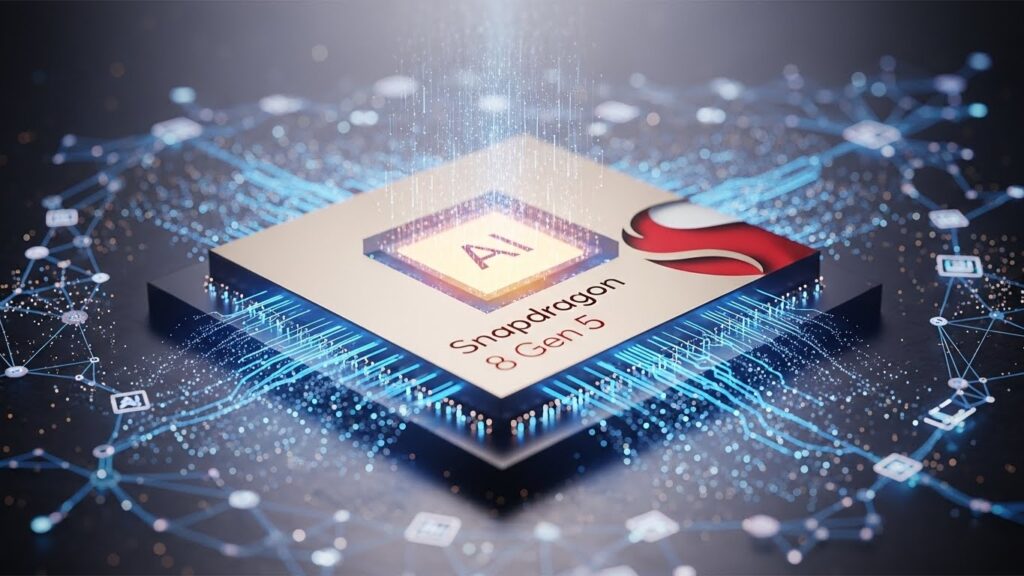
Pixel 10’s AI Magic Eraser video support relies on Snapdragon 8 Gen 5 (actually Tensor Gen 4) processing power. Running diffusion models 30 times per second to remove objects from every video frame requires substantial neural processing. Snapdragon 8 Gen 4 and earlier processors lack sufficient performance for practical video processing.
Real-Time Voice Translation
Google’s real-time voice translation feature—simultaneously transcribing and translating voice conversations—requires executing two sophisticated neural models (transcription and translation) in parallel with latency under 200 ms. This is computationally demanding, only practical on Snapdragon 8 Gen 5 and newer processors.
On-Device Video Processing and Enhancement
VLOG editing capabilities—automatically enhancing video colour grading, adjusting lighting, and applying effects in real-time—are enabled by Snapdragon 8 Gen 5’s parallel neural processing. These features are arriving in 2026 as the processing power becomes standard.
Continuous Personalised AI Models
Snapdragon 8 Gen 5’s support for on-device training enables truly personalised AI models. Rather than using generic models trained on millions of users’ data, your device can continuously improve models based specifically on your behaviour and preferences. This requires substantial computational resources available on the neural processing unit.
Should You Upgrade to Snapdragon 8 Gen 5?
The decision depends on your usage patterns and device age.
For Current Snapdragon 8 Gen 4 Users (Pixel 9, Galaxy S24)
Upgrading immediately isn’t essential. Snapdragon 8 Gen 5 provides meaningful but not revolutionary improvements. If your current device handles your workload comfortably, waiting until your device reaches end-of-life (2-3 years) is reasonable. However, if you frequently use video editing, play demanding games, or want the latest AI features (video magic eraser, real-time translation), upgrading to Snapdragon 8 Gen 5 is justified.
For Snapdragon 8 Gen 3 and Earlier Users (Pixel 8, Galaxy S23)
The jump to Snapdragon 8 Gen 5 is substantial enough to justify upgrading if you’re otherwise ready for a new phone. AI performance is 35%+ faster, battery efficiency improves, and gaming performance is noticeably better. This is a solid justification for upgrade decisions.
For Budget and Mid-Range Device Users
Snapdragon 8 Gen 5 devices are primarily flagship-priced. Unless you specifically need the best possible AI performance or gaming capability, budget devices with older processors are adequate for most users. The Snapdragon 8 Gen 5 advantage diminishes if your typical usage is web browsing, social media, and messaging.
Conclusion
Snapdragon 8 Gen 5 represents a pivotal moment where processor design finally centres on AI as a primary workload alongside traditional computation. The Snapdragon 8 Gen 5 phones list includes most 2026 flagship devices from Samsung, Google, OnePlus, Xiaomi, and others, bringing genuinely faster AI-dependent features to mainstream users. Video-based AI Magic Eraser, real-time voice translation, and on-device personalised AI models are enabled by Snapdragon 8 Gen 5’s processing power. Whether upgrading to a Snapdragon 8 Gen 5 device is justified depends on your usage patterns—gaming and video editing enthusiasts benefit substantially, whilst casual users see modest improvements. For most users, the processor is a meaningful but non-revolutionary upgrade justifying replacement when your current device approaches end-of-life.
FAQs
Q1: Are all 2026 flagship phones equipped with Snapdragon 8 Gen 5?
A1: Most are, but not universally. Samsung Galaxy S25 uses Snapdragon 8 Gen 5 globally in Western markets, but Chinese variants sometimes use Exynos processors. Google Pixel 10 uses a proprietary Tensor Gen 4 chip based on Snapdragon 8 Gen 5 architecture, not the Snapdragon processor directly. Always verify your specific device model’s processor, as Chinese, Indian, and global variants sometimes differ.
Q2: Does Snapdragon 8 Gen 5 support on-device training for machine learning?
A2: Yes, but with limitations. The NPU supports lightweight training for personalisation tasks, allowing your device to improve models based on your behaviour. However, training sophisticated models from scratch still requires cloud processing or external hardware. Think of it as fine-tuning existing models rather than training entirely new ones.
Q3: Is Snapdragon 8 Gen 5 required for AI features like Magic Eraser?
A3: No, but performance improves significantly. Magic Eraser works on Snapdragon 8 Gen 4 and earlier processors, but processes more slowly. Pixel 9 can use AI Magic Eraser, but processing takes longer than Pixel 10. Video-based magic eraser is exclusive to Snapdragon 8 Gen 5+ due to processing demands.
Q4: How much better is Snapdragon 8 Gen 5 performance compared to earlier generations?
A4: For AI workloads: 35-40% faster. For GPU/gaming: 40% faster. For CPU/general performance: 15-20% faster. Battery efficiency improves despite higher performance, primarily due to the dedicated, efficient neural processor handling AI workloads.
Q5: Will Snapdragon 8 Gen 5 remain relevant in 2027-2028?
A5: Yes, for most users. The processor is robust enough to handle realistic workloads for 3+ years. By 2028, when Snapdragon 8 Gen 7 or Gen 8 releases, Snapdragon 8 Gen 5 will still provide acceptable performance, though you’ll lose access to the newest AI features exclusive to newer processors.